

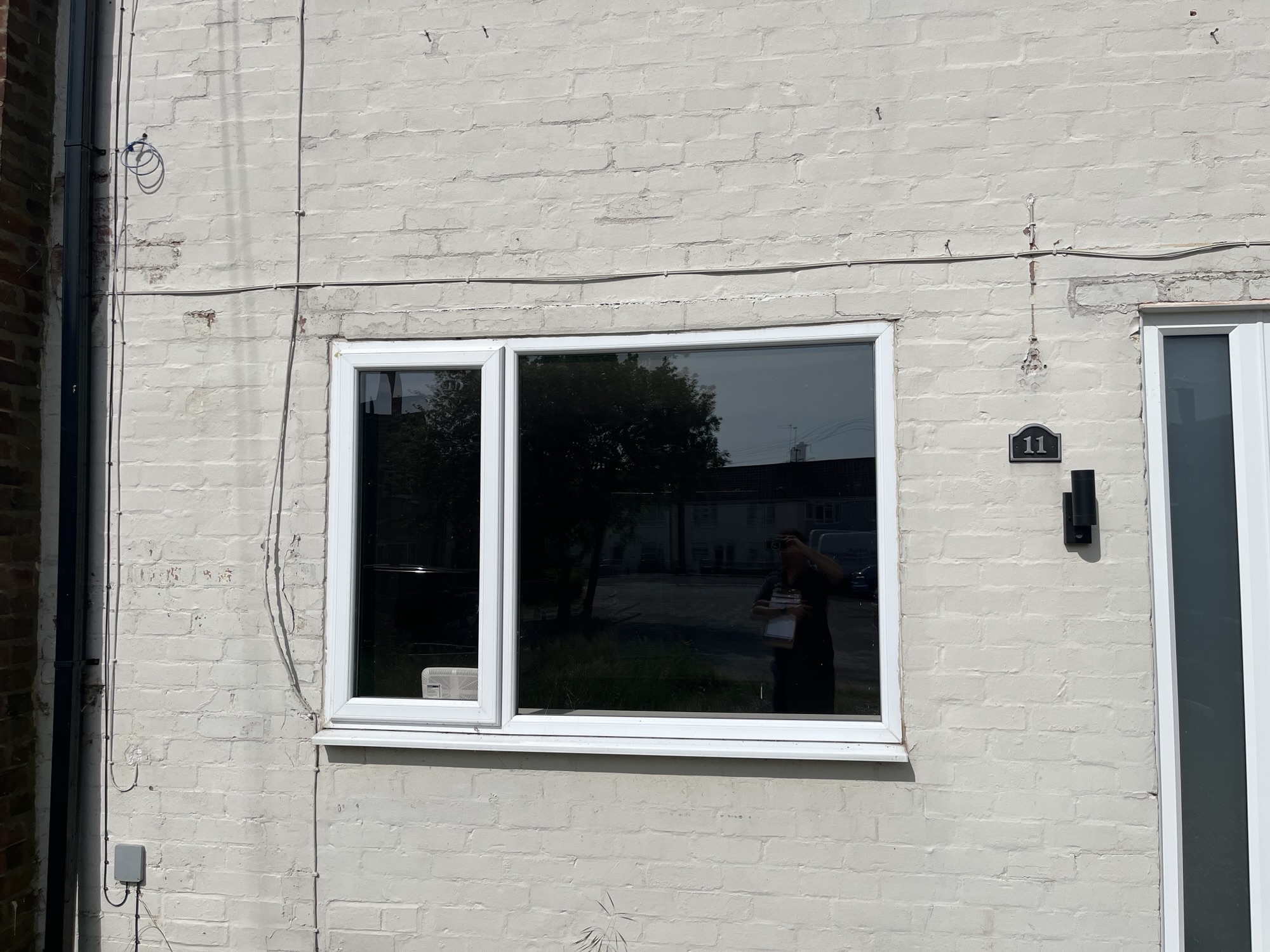
We get asked to quote regularly where bricks have dropped down over uPVC windows, a dropped lintel is a serious structural issue that should not be ignored. The lintel is the horizontal beam spanning across the top of a window or door opening, designed to carry the heavy load of the brickwork above it.
This job was in Beeston Rylands, we were concerned we would need access internally but we managed to do this job entirely from the inside.
A Common Culprit: The “Window Upgrade” Trap
Most of the dropped lintels we attend to happen when old wood or metal window frames are replaced with modern uPVC. In older houses, those sturdy timber frames were actually helping to hold up the brickwork. When installers replace them with lightweight uPVC without installing a new steel lintel, the heavy masonry above immediately drops onto the weak plastic frame.


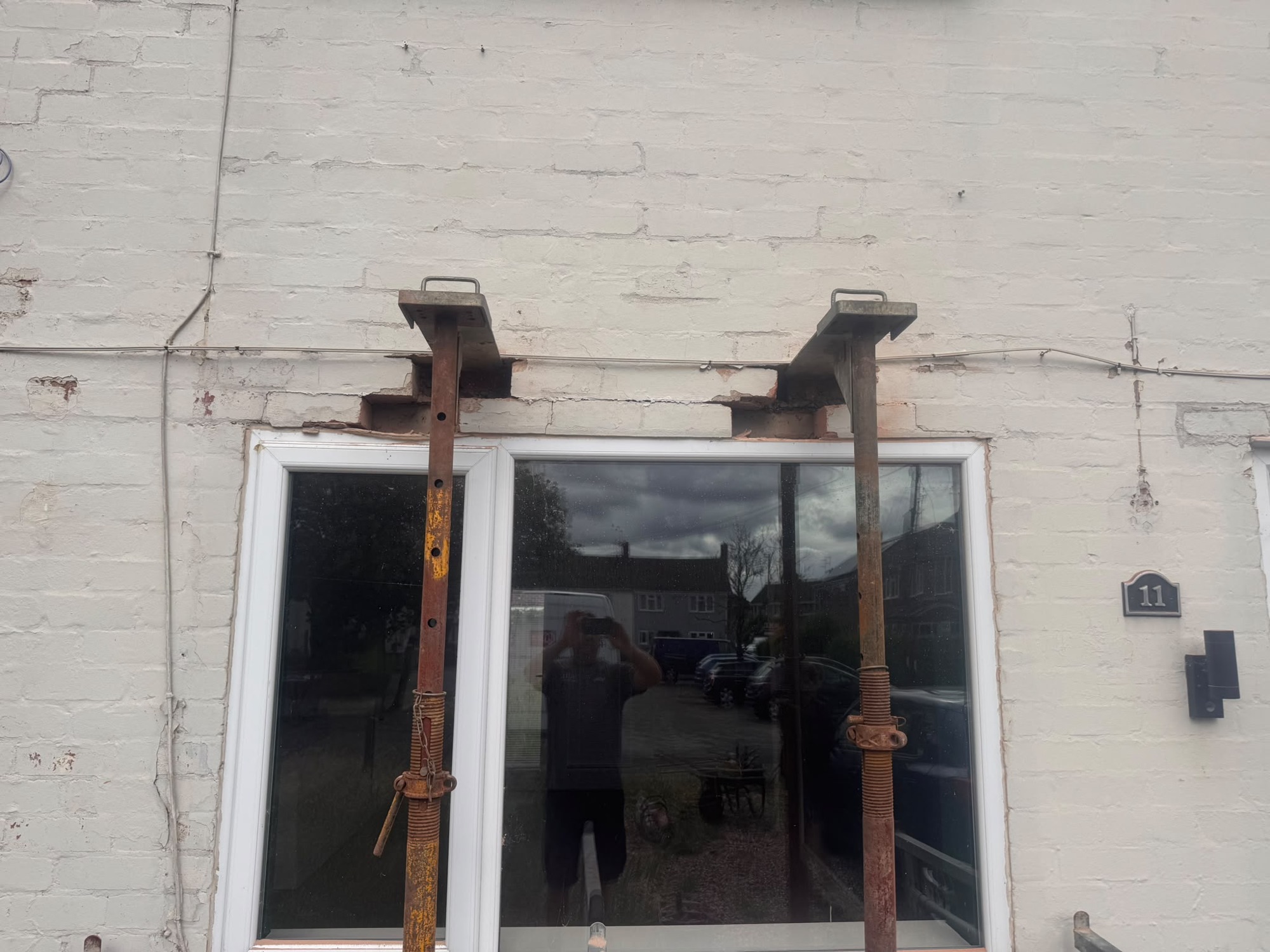
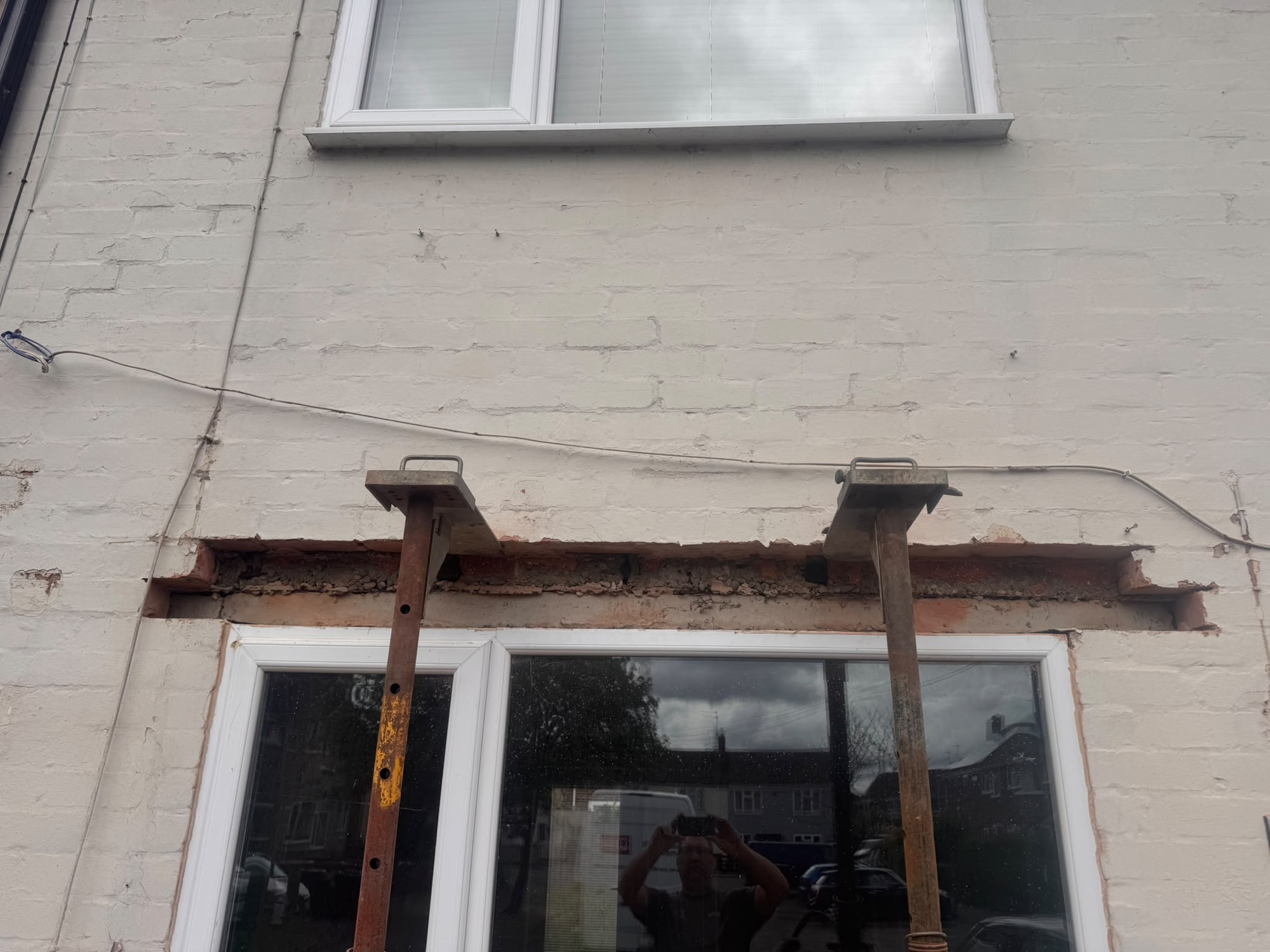
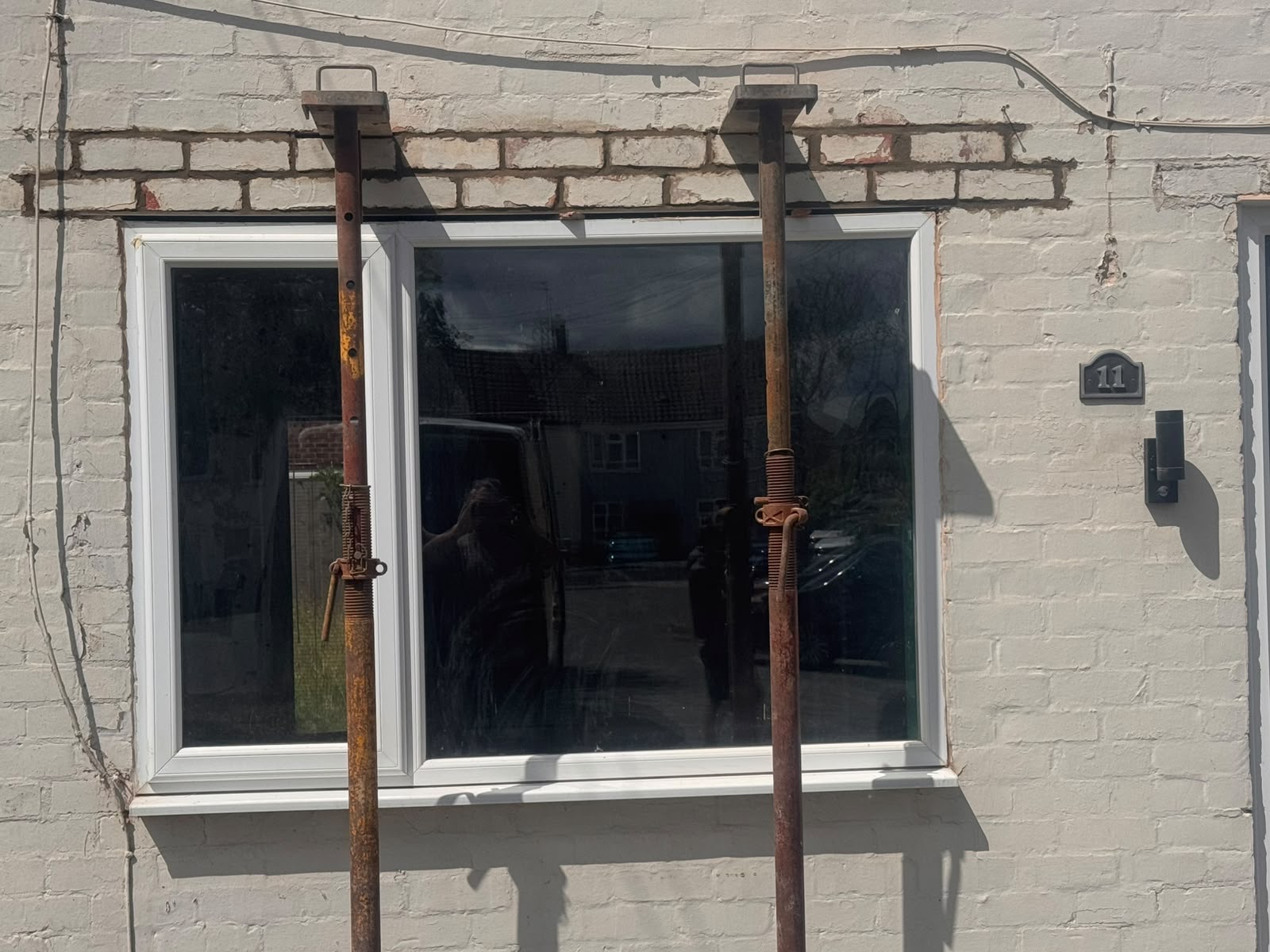
A bit more information on fallen lintels –
When a lintel sags, fails, or “drops,” that weight is no longer being distributed properly to the surrounding walls. This triggers a destructive chain reaction of problems throughout the property.
1. Structural Cracking and Masonry Damage
The most immediate consequence is that the bricks directly above the opening lose their support and begin to sink.
-
Diagonal “Stepped” Cracking: You will typically see jagged, stepped cracks opening up in the mortar joints starting from the top corners of the window or door frame and moving upwards and outwards.
-
Loose or Bulging Brickwork: In advanced cases, the brick courses (especially “soldier courses,” where bricks stand vertically) will visibly bow outwards or sag into the opening. Left long enough, individual bricks can loosen completely and fall out.
2. Distorted and Jammed Windows/Doors
As the masonry drops, the immense weight of the wall is transferred directly onto the window or door frame below it—something the frame was never designed to handle.
-
Sticking Openings: uPVC, timber, or aluminum frames will begin to compress and warp. This causes doors and windows to catch, jam, or become completely impossible to open and close.
-
Cracked Glass: The shifting, downward pressure on the window frames can distort them enough to shatter or crack the glass panes.
3. Water Ingress and Internal Damp
Structural movement creates paths for water to enter your home.
-
Gaps in Mortar: As the brickwork shifts, gaps open up in the external mortar joints, acting like a funnel for rainwater.
-
Internal Damp Patches: This water will seep through the cavity or internal blockwork, destroying internal plaster, causing paint to peel, and creating localized patches of damp and mold around the window or door heads.
4. Severe Damage to Internal Finishes
The movement isn’t just external. The dropping of the wall shifts the internal blockwork as well.
-
You will likely notice deep horizontal or diagonal cracks in the plaster above the window or door on the inside of the room.
5. Risk of Collapsing Brickwork
While rare for a house to fall down entirely from a single failed lintel, a localized collapse of the brick triangle directly above the window or door is a very real hazard if the problem is completely neglected.
How much does it cost?
- The lintel is £150-£400 depending on the load and if it needs a calculation
- Its normally a days work to set up, put the lintel in then a return visit to take the Acro’s down and point up. Allow £600-£850
- Depending on the height scaffold may be required to provide safe access. Allow £300-£400 for an upstairs window
- Plus VAT
If you have a lintel that has dropped call us on 07737 988 243 for a free quote or email quote@swallowhillhomes.com