

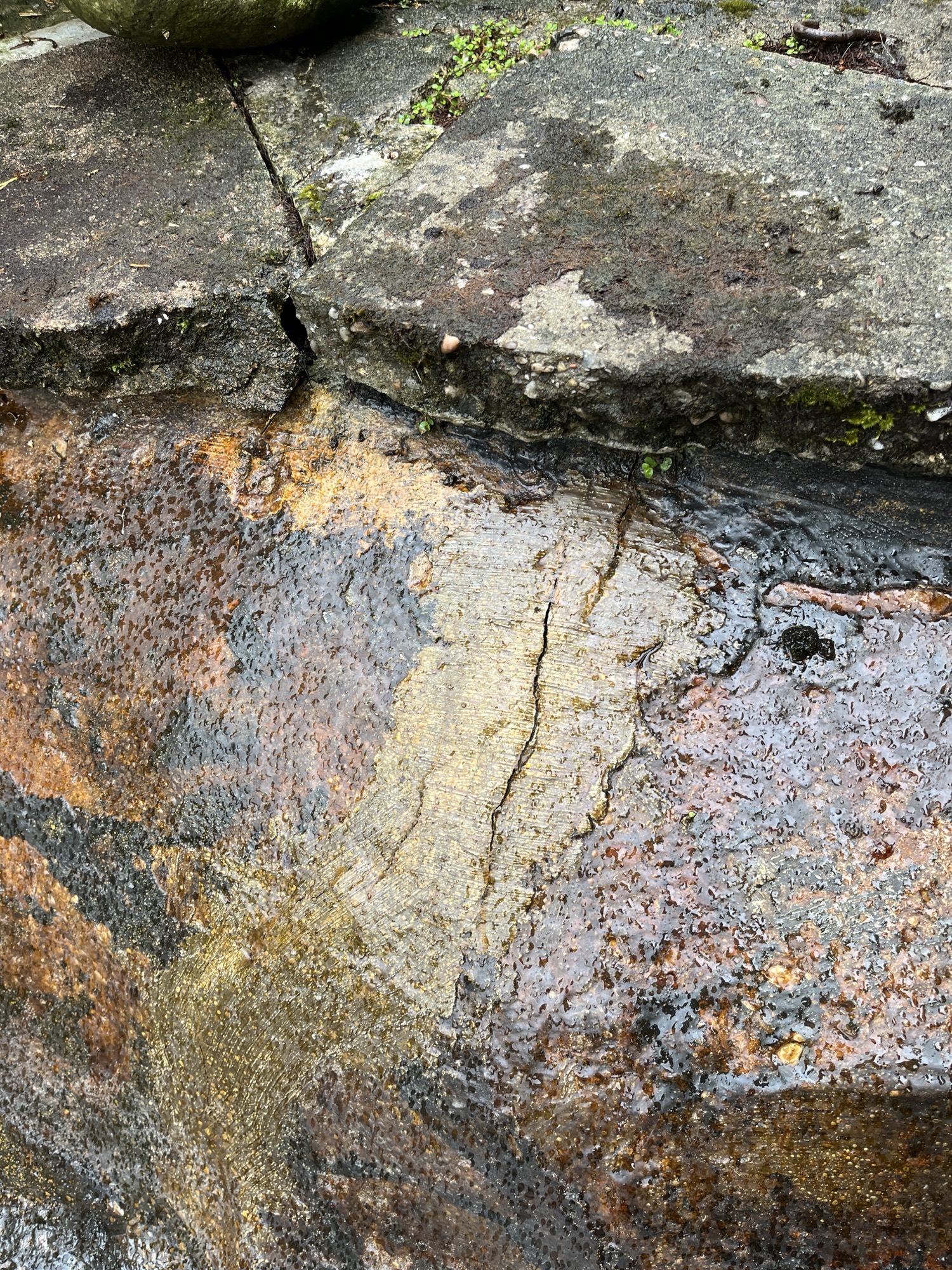
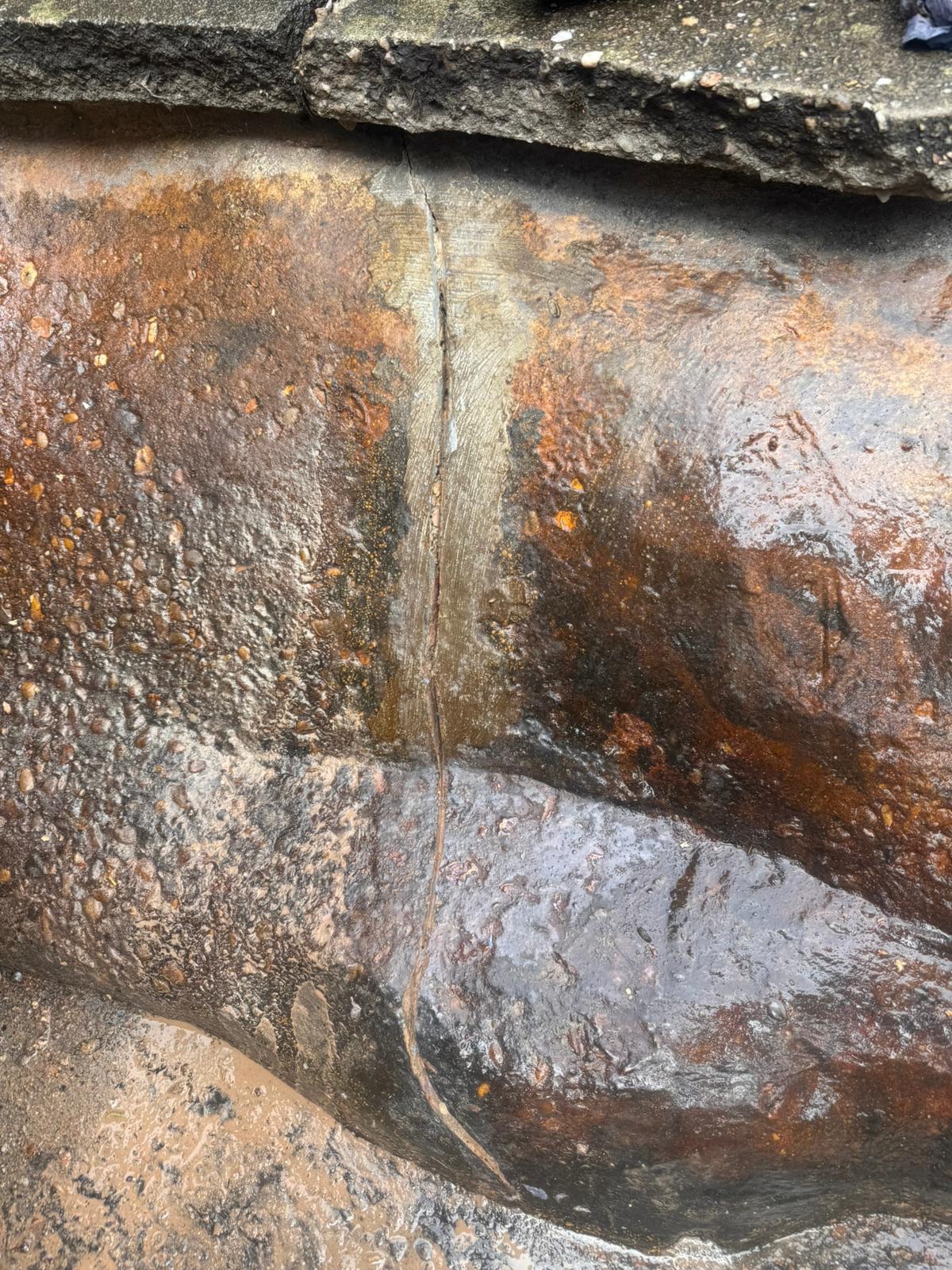
Our customer messaged us to say there pond was leaking and could we help.


Expert Guide: How to Properly Repair a Leaking Fish Pond
A leaking pond can be a major headache, but you don’t always need a full overhaul to get it back in shape. Whether you are dealing with a crack in a concrete base or a tear in a liner, the key to a lasting repair is in the preparation and the quality of your materials.
1. First, Confirm It’s a Leak
Before you start the heavy lifting, make sure the water loss isn’t just natural evaporation. In this case the cracks we’re visible.
- The Pump Test: Turn off your pump. If the water level stops dropping, the issue is likely in your plumbing or waterfall, not the pond structure itself.
- The Perimeter Check: If the water level keeps falling with the pump off, you have a structural leak. Check the perimeter for boggy ground or unusually lush plant growth—this is often where water is escaping the basin.
2. Professional Preparation is Key
As we’ve found in our recent repairs, the “seal” is only as good as the surface it’s applied to.
- The “Grind Out”: For cracks in concrete or solid structures, don’t just smear sealant over the top. Use a grinder to widen the crack slightly. This creates a clean “key” or groove, giving your sealant a much better surface to adhere to.
- Deep Cleaning: Once ground out, clear all debris, algae, and loose concrete from the crack. The surface must be clean and bone-dry before you apply any product.
3. Choosing the Right Material
Avoid generic household silicone. For pond repairs, we recommend a high-quality marine-grade product, such as the MS300 Marine Sealant.
- Why it works: Look for a sealant that remains slightly flexible after curing. Ponds can shift slightly with temperature changes and ground settlement; a flexible sealant will move with the structure, preventing the crack from reopening immediately.
- Application: Apply the sealant firmly into the groove, ensuring it fills the entire void. Use a smoothing tool for a clean, watertight finish that won’t collect debris.
4. Maintenance and Prevention
Once the repair is cured, regular maintenance will keep your pond healthy and leak-free:
- Routine Inspection: Every month, check the basin and pipes for signs of stress.
- Vegetation Control: Prune back nearby trees and shrubs. Aggressive root growth is a common culprit for structural cracks and liner punctures.
- Debris Removal: Keep the pond clear of heavy litter and dead plant matter, which can block pipes and contribute to water stagnation.
Cost
- Materials £15-£30
- Labour up to £200 depending on location.
Need our help, call us on 07737 988 243