Categories
External Resin bound gravel

Long Eaton, Derbyshire Resin Bonded Gravel over concrete path

Recent Project: Durable Resin Bonded Gravel Driveway, Long Eaton

Our customer had had a fall from the slightly uneven surface of an old concrete path, she initially contacted us to renew it but we suggested adding resin bonded gravel on top would be a cheaper option and achieve the same effect. First impressions matter. We recently completed a driveway transformation for a client in Long Eaton, Derbyshire, and the choice of surfacing has completely changed the look and functionality of the property frontage.

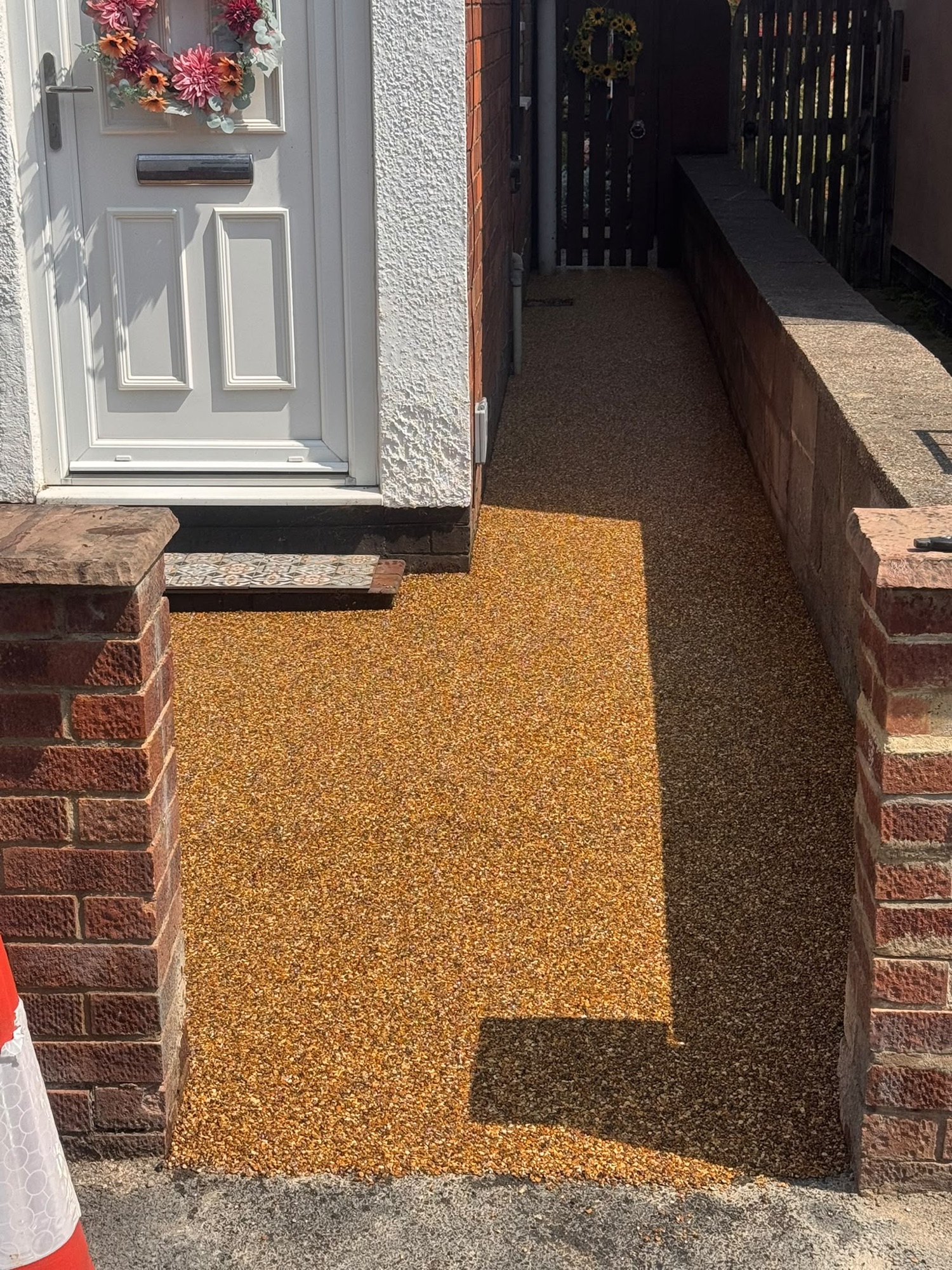
For this project, we installed Honeycomb-coloured resin-bonded gravel, sourced from the specialists at The Resin Mill. Their website has a really good AI powered visualiser for showing a “before” and “after”

img_7135

Why Resin-Bonded Gravel?

We chose this system for three key reasons:

  • Aesthetics: The charcoal finish provides a crisp, modern contrast that really elevates the home’s exterior. It looks clean, sophisticated, and stays looking that way for a long time.
  • Permeability: Like our previous ramp projects, drainage is key. Resin-bonded systems allow water to permeate the surface naturally, which reduces pooling and takes the pressure off local drainage systems—a huge benefit for any driveway or pathway.
  • Durability: It creates a hard-wearing, slip-resistant finish that stands up well to daily vehicle use and the typical British weather.

Our Installation Process:

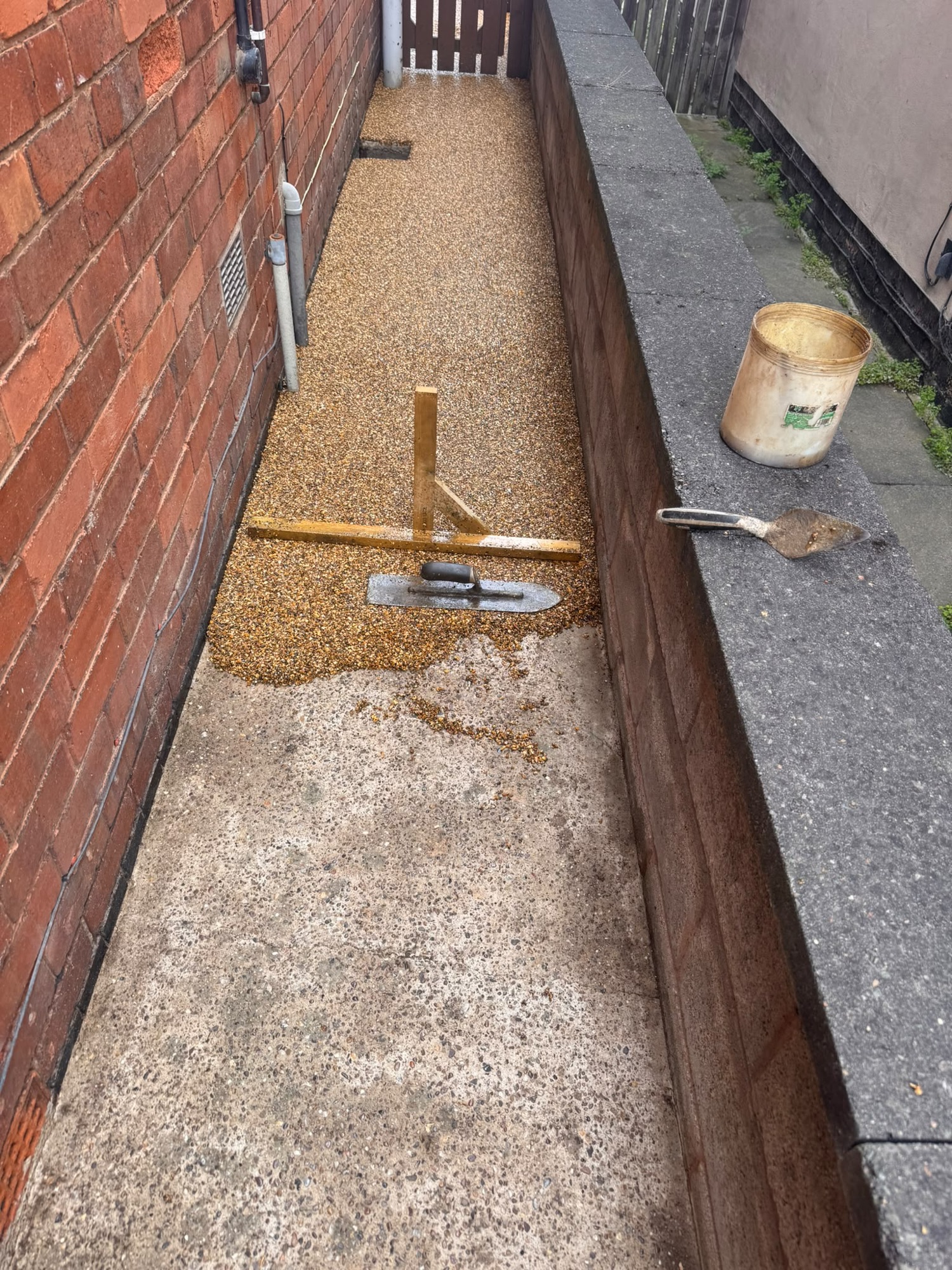
  • Preparation: We pressure washed the concrete surface using our high powered pressure washer, and let it dry. We applied a primer to get suitable bonding for the RBG.
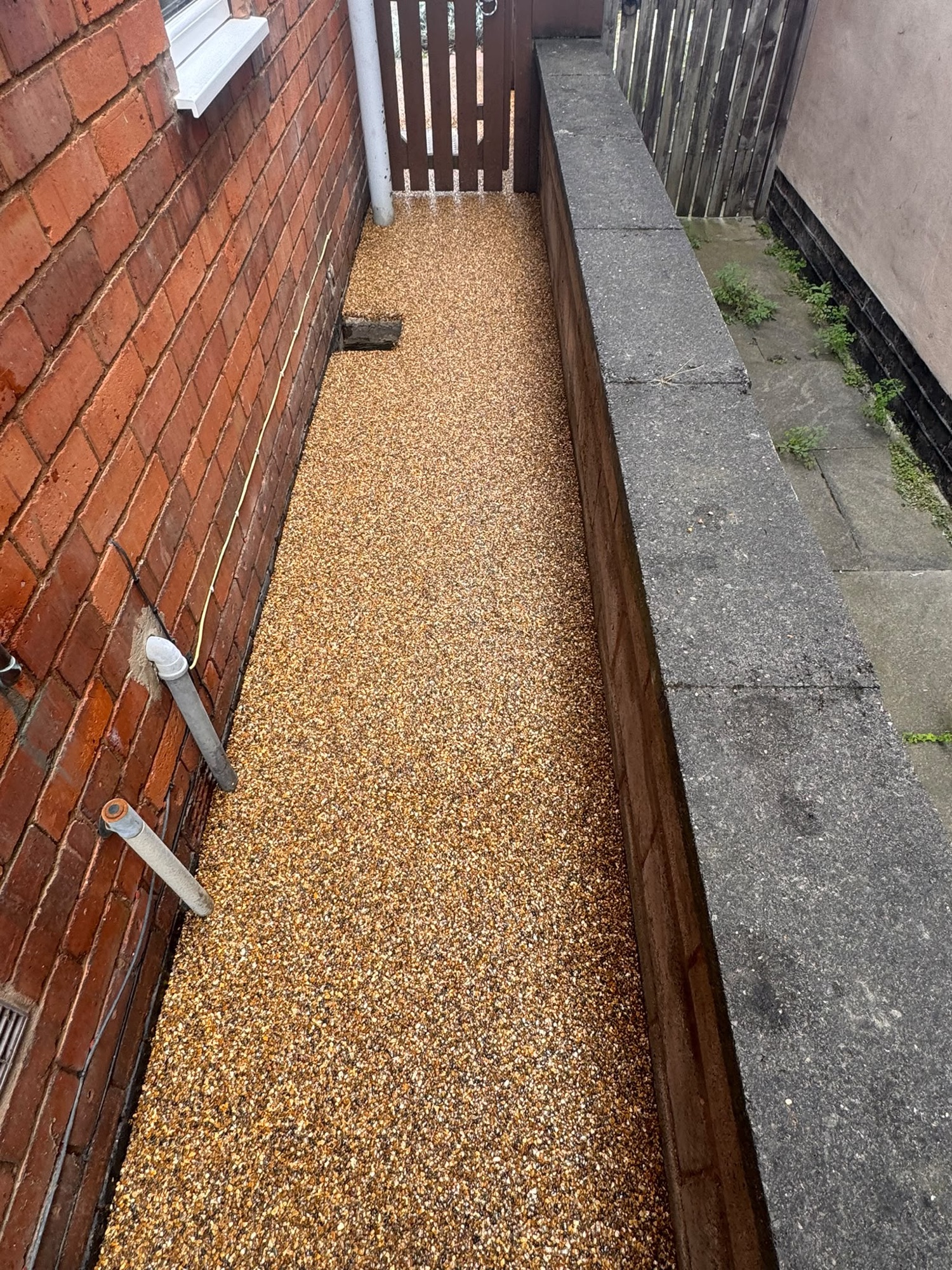
  • Precision Application: The resin-bonded gravel was applied to a consistent depth, ensuring a smooth, uniform texture across the entire driveway.
  • Finishing: We ensured all edges were crisp and clearly defined against the existing boundary walls and lawns, providing that “perfect finish” look.

Problems we had along the way

  • We had originally planned to raise the drain cover to the rear of the property but the edge was concreted into the building, we therefore took out the mortar around the edge and flaunched the RBG in so there was no trip hazard.

Project Highlights:

  • Location: Long Eaton, Derbyshire
  • Materials: Charcoal Resin-Bonded Gravel (The Resin Mill)
  • Key Benefits: Excellent drainage, modern aesthetic, slip-resistant, and low-maintenance.

Looking to Upgrade Your Driveway or Pathway?

Whether you’re looking for a low-maintenance driveway or a durable, accessible pathway for your home, we focus on high-quality materials and precise installation.

Let’s get your project off the ground. Contact us on 07737 988 243

Categories
Plastering

Renovating History: Managing Plastering Challenges During a Heatwave

Renovating History: Managing Plastering Challenges During a Heatwave

Our current renovation project in Sandiacre, Derbyshire has been a journey. After navigating initial labour hurdles, we’re glad to say the project is back on track.

Working on a property that is over 100 years old is rarely straightforward; achieving a top-quality, modern finish on historic walls requires patience, experience, and the right hands. That is why we brought in Anthony Wood from [link removed] in Long Eaton to handle the heavy lifting.

img_6875
previous arrow
next arrow

We have a new Media Wall arriving next week, and in preparation, we made the strategic decision to fully replaster the master bedroom and the living room (excluding the areas where the media and fitted furniture will sit). While it is tempting to spend days sanding and filling, we’ve found that it is often better to take the hit and replaster the whole room to ensure a flawless, long-lasting canvas. The Heatwave Challenge

Just as we were making progress, Mother Nature threw us a curveball. We were plastering right in the middle of some of the highest temperatures ever recorded in the United Kingdom.

The heat proved to be quite a challenge. Anthony was on-site by 6 am every morning to squeeze in a few productive hours before the heat of the day truly struck, but it was still a battle against the elements. At one point, the living room ceiling had to be plastered twice because the heat was so intense that the first coat “went off” (dried) far too quickly to achieve a smooth finish.Why Heat Affects Plaster

That experience was a vivid reminder of why plastering in extreme heat is such a technical risk. When the evaporation of water exceeds the material’s hydration rate, you often encounter several structural and aesthetic defects:

  • Shrinkage Cracking: Rapid moisture loss causes the plaster to shrink before it has gained sufficient internal strength, leading to hairline cracks or “spiderweb” micro-cracking.
  • Weak Adhesion and Surface Strength: If the surface dries too quickly, the plaster won’t bond correctly to the substrate. This results in a weak, powdery, or chalky finish that makes for a poor base for decorating.
  • Reduced Working Time: High temperatures drastically shorten the window available to pump, place, and finish the material. This often forces a rushed application, which can lead to “cold joints” and difficulty achieving a consistent, smooth surface.
  • Inconsistent Coloration: Variations in drying rates—often caused by uneven exposure to direct sunlight, drafts, or hot versus shaded areas—can result in patchy or mismatched colors across the wall.
  • Excessive Suction: A hot substrate will aggressively draw moisture out of the wet plaster, causing premature drying and increased surface porosity.

Our Tips for Mitigation

If you are planning a plastering project during warmer weather, don’t let the conditions derail your finish. Here are a few ways to mitigate these issues:

  1. Work Early: Start as early as possible to finish your main work before the peak heat of the day.
  2. Dampen Substrates: Thoroughly dampen the walls before applying the plaster to help manage suction.
  3. Control Your Mix: Use cold or even iced water to mix the plaster to extend the working time.
  4. Protect the Area: Shield your workspace from direct sun and hot winds by using tarps, blinds, or shading.

Even with the challenges of a 100-year-old house and a UK heatwave, we are happy with the results. If you’re embarking on a renovation, don’t underestimate the impact of the weather—it pays to plan ahead!

Next in is the joiner to do the skirting and architrave before the plasterer comes in.

Where did we get our plaster from?

Big shout-out to the team at Galaxy insulation in Long Eaton, they are our go-to for all things insulation, dry lining, and plaster.

I’ve developed a bit of a routine of swinging by at 3:55 PM to grab our essentials for the next day—the staff are always incredibly helpful and the prices are spot on. Why the rush? Because quality matters. We never keep plaster on-site for longer than 28 days to avoid it going to waste. Fresh materials mean a better finish every time. If you’re looking for a reliable supplier, these are the folks to see!

Need a quote for some building work, call us on 07737 988 243